
Sordit Digital

Sordit Digital

Healthcare SEO Strategy 2026
Blog

Healthcare SEO Strategy 2026: Winning Local Patients with E-E-A-T

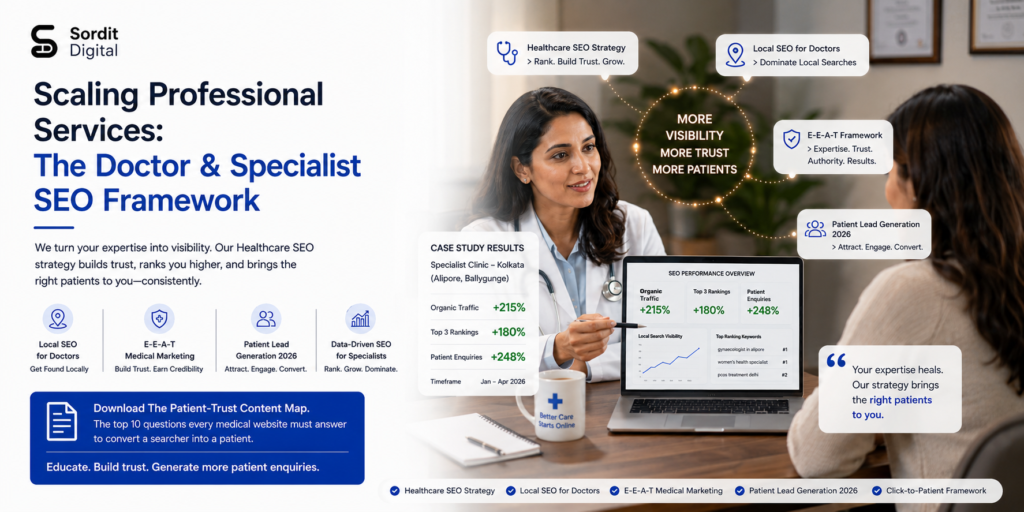
For medical professionals, the digital landscape of 2026 is no longer just about “being found”—it is about “being trusted.” Google’s algorithms have become incredibly sophisticated at identifying “Your Money or Your Life” (YMYL) content. If you are a doctor, a clinic owner, or a hospital administrator, a generic website is now a liability. In 2026, a winning healthcare SEO strategy requires more than just keywords; it requires a deep integration of medical authority and hyper-local precision. To turn searchers into patients, your practice must prove its expertise before the first appointment is even booked. 1. The Foundation of E-E-A-T Healthcare SEO In the medical field, Google prioritizes E-E-A-T healthcare SEO: Experience, Expertise, Authoritativeness, and Trustworthiness. In 2026, “AI-generated medical fluff” is actively penalized. Google wants to see that your content is written or verified by a credentialed professional. How to implement E-E-A-T for your clinic: Verified Author Bios: Every blog post or service page should have a clear author box linked to the doctor’s LinkedIn profile, NPI number, and medical board certifications. Content Citations: Back up every medical claim with links to peer-reviewed journals or official health organizations (like the WHO or ICMR). Video Explainers: A 30-second video of a doctor explaining a procedure provides “Experience” and “Trust” that text alone cannot match. 2. Dominating with Hyper-Local SEO for Doctors In 2026, ranking for “Best Cardiologist in India” is a waste of resources for a local clinic. Patients search for convenience. Your local SEO for doctors must target “Micro-Locations”—the specific neighborhoods, blocks, and landmarks surrounding your clinic. The “Zero-Distance” Strategy Patients now use voice search and AI agents to find “the nearest pediatrician open now.” To win these searches: Google Business Profile (GBP) Mastery: Ensure your GBP is updated daily with “Clinic Updates,” photos of your waiting room, and real-time holiday hours. Neighborhood-Specific Landing Pages: If your clinic is in Salt Lake, Kolkata, create content specifically for residents of Sector I, II, and III. Mention local landmarks and nearby pharmacies to signal “Local Relevance” to Google. 3. Medical Practice Marketing: Beyond the Search Bar Effective medical practice marketing in 2026 bridges the gap between a search result and a scheduled surgery. Your website must act as a digital “Front Desk.” Integrated Booking Systems: If a patient finds you via a healthcare SEO strategy, they should be able to book an appointment directly from the search result or your landing page without picking up the phone. Patient-Centric FAQs: Use your blog to answer the real questions patients ask in the exam room: “How long is the recovery for X?” or “Does my insurance cover Y?” These “Long-Tail” queries are the easiest way to rank #1. 4. Reputation Management as an SEO Signal In 2026, reviews are not just for social proof; they are a direct ranking factor. Google’s AI analyzes the sentiment and keywords within your patient reviews. If multiple patients mention your clinic is “the best neurosurgeon for migraine treatment,” Google will automatically begin ranking you higher for “migraine treatment” searches in your area. Encouraging patients to leave detailed, keyword-rich reviews (within ethical and HIPAA/legal guidelines) is a core pillar of modern local SEO for doctors. 5. The Future: Voice Search and AI Medical Assistants As we look toward the end of 2026, more patients are using AI assistants to “find a doctor who takes my insurance and has an opening this Friday.” A forward-thinking healthcare SEO strategy involves using “Structured Data” (Schema Markup) to tell these AI agents exactly what your specialties are, what insurance you accept, and what your real-time availability is. At Sordit Digital, we ensure your technical backend is as healthy as your patients. Final Checklist for Your 2026 Healthcare Strategy Audit your practice’s digital health against these four pillars: Expert Verification: Are all your medical pages signed off by a verified doctor to satisfy E-E-A-T healthcare SEO? Hyper-Local Focus: Does your website mention the specific neighborhoods and landmarks around your clinic? Speed and Accessibility: Does your site load in under 2 seconds on a mobile device? (Patients in pain are not patient with slow sites). Review Consistency: Do you have fresh, positive Google reviews from within the last 30 days? Conclusion Winning patients in 2026 is about proving you are the most trusted local authority before the patient ever walks through your door. By combining healthcare SEO strategy with a focus on local relevance, Sordit Digital helps your practice grow while you focus on what matters most: patient care.

Short-Form Video Marketing 2026
Blog

Short-Form Video Marketing 2026: Why Visual Brands Must Shift to Interactive Content

For years, “visual brands”—luxury interior designers, high-end salons, and premium e-commerce boutiques—thrived on a simple “Aesthetic Grid” strategy. A beautiful, static photo of a renovated living room or a perfectly styled haircut was enough to stop the scroll. But as we settle into 2026, the “Pretty Picture” era has officially ended. Algorithms have pivoted, and consumer attention spans have fragmented. Today, high-end brands are finding that their most beautiful photos are getting less reach than a raw, 15-second clip. To stay relevant, businesses must master short-form video marketing 2026, moving beyond pure aesthetics toward high-engagement, interactive storytelling. 1. The Death of the Static Aesthetic In the current landscape, “Visual” no longer means “Static.” The 2026 visual content marketing trends show a massive shift toward “Living Content.” Platforms like Instagram and TikTok now prioritize the “Time Spent” metric over the “Like” metric. A static image takes 1 second to view. A short-form video holds a user for 15 to 30 seconds. This signals to the algorithm that your content is valuable, pushing your brand into the feeds of thousands of new potential clients. For a luxury interior brand like ABS Decor, showing a “Before & After” transition in a 9:16 vertical format is now 5x more effective than a side-by-side photo post. 2. Implementing an Interactive Video Strategy The biggest breakthrough in 2026 isn’t just video—it’s interactive video strategy. Passive watching is being replaced by active participation. Brands that allow users to “choose their own adventure” or interact with the video are seeing a 40% higher conversion rate. How to make your videos interactive: Poll Hooks: Ask viewers to vote on a design choice (e.g., “Gold fixtures or Matte Black?”) directly within a Reel. Comment-to-DM Automation: Use keywords like “DESIGN” or “CATALOG” in your captions. When a user comments, an automated flow sends your portfolio or booking link directly to their inbox. Shoppable Hotspots: For e-commerce brands, 2026 technology allows users to tap a product inside a moving video to see the price and “Add to Cart” without leaving the app. 3. Dominating Instagram Reels for Business in 2026 While many platforms exist, Instagram Reels for business remains the gold standard for high-ticket service industries. However, the way we use Reels has changed. In 2026, the “Polished Commercial” is out; “Authentic BTS (Behind the Scenes)” is in. People want to see the process, the personality, and the expertise behind the brand. The “Expert Voiceover”: Instead of just trending music, use original audio to explain why a certain material was chosen for a project. Micro-Vlogs: A 20-second “Day in the Life of a Marketing Consultant” or “Morning at the Salon” builds a human connection that a logo never could. 4. The ROI of Engagement vs. Views Many brands get distracted by “Viral Views.” In short-form video marketing 2026, Sordit Digital focuses on “Conversion Views.” A video with 1,000 views from local residents in Kolkata who interact with a poll is infinitely more valuable than a video with 100,000 global views that results in zero inquiries. By focusing on an interactive video strategy, you are filtering your audience. Only the people truly interested in your service will take the time to interact, providing you with a list of high-intent leads ready for follow-up. 5. Visual Content Marketing Trends: What’s Next? As we look toward the second half of 2026, we are seeing the rise of Augmented Reality (AR) Video Filters. Imagine a salon allowing a client to “try on” a hair color through a video filter before booking, or an interior designer letting a client “place” a sofa in their room via a 3D video hook. Brands that start mastering basic short-form video today will be the only ones equipped to handle these advanced visual technologies tomorrow. Final Checklist for Your Video Strategy To ensure your visual brand doesn’t get left behind, audit your content against these four pillars: Motion First: Is at least 80% of your feed dedicated to short-form video marketing 2026? The Interaction Hook: Does every video give the user something to do (Vote, Comment, Tap)? Vertical Optimization: Are you filming exclusively in 9:16 to maximize screen real estate on Instagram Reels for business? Value over Polish: Are you providing a “Takeaway” (a tip, a laugh, or a transformation) in every clip? Conclusion Aesthetics get people to look, but interaction gets people to buy. By shifting your focus from “looking good” to “engaging deeply,” Sordit Digital helps your brand dominate the digital landscape. Don’t just show them your work—make them a part of it.

Cookieless Advertising Strategy
Blog

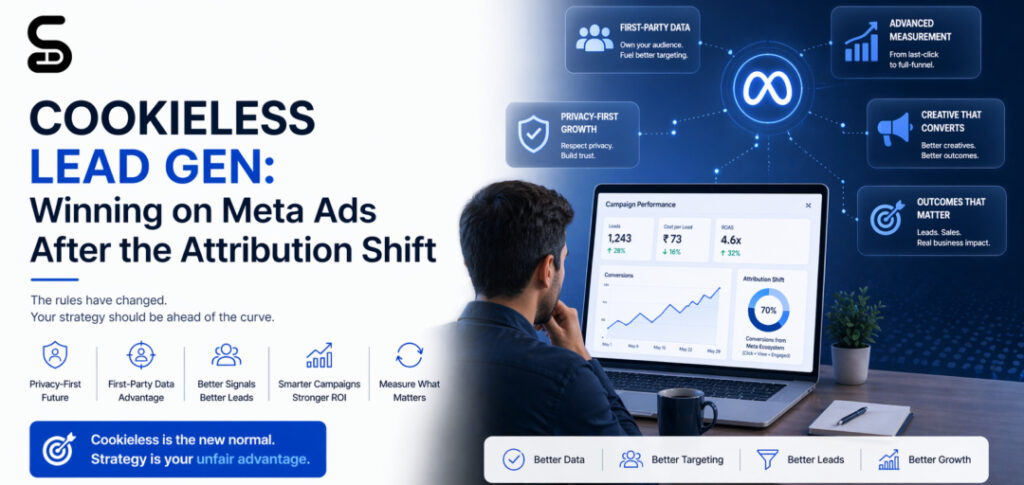
Cookieless Advertising Strategy: Getting Cheaper Leads in a Post-Cookie World

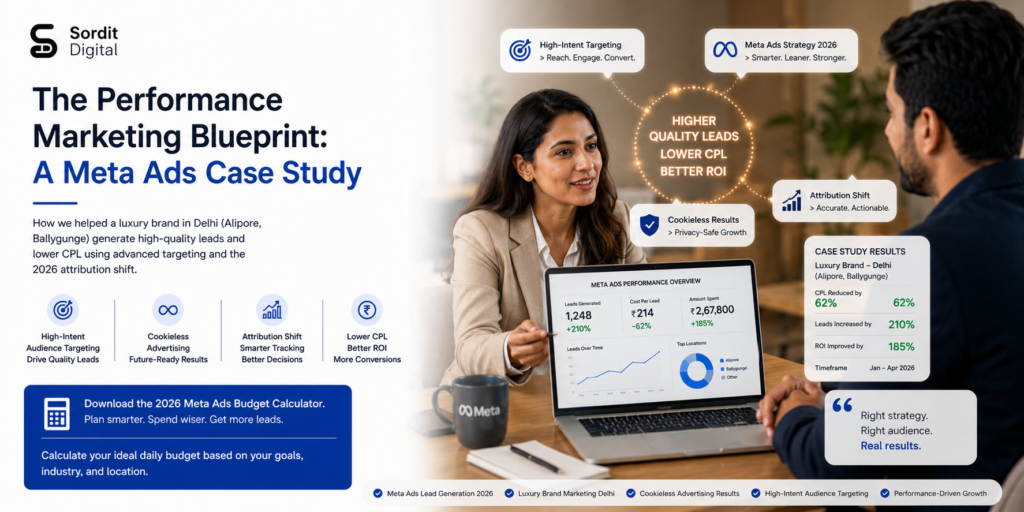
For over a decade, digital advertisers relied on a “magic pixel” to track every move a customer made across the web. But as we reach the midpoint of 2026, that era has officially ended. With the total phase-out of third-party cookies across all major browsers and the tightening of global privacy laws, the old way of targeting is dead. If you’ve noticed your Cost Per Lead (CPL) spiking or your conversion tracking becoming “blurry,” you aren’t alone. However, the most successful brands aren’t panicking—they are pivoting. By adopting a robust cookieless advertising strategy, Sordit Digital is helping clients move away from “tracking” and toward “predicting.” 1. The Shift to First-Party Data Marketing In a world without third-party cookies, your internal database is your most valuable asset. First-party data marketing is the practice of using information your customers have given you directly—emails, phone numbers, and past purchase behaviors—to fuel Meta’s AI. In 2026, Meta’s “Advantage+ Custom Audiences” perform best when they have a “Seed List” to learn from. Instead of asking Meta to “find people interested in interior design,” we upload a hashed list of your existing high-value clients. Meta’s AI then finds “Lookalike” profiles based on real, verified humans rather than unstable browser cookies. 2. Meta Ads Lead Generation 2026: The Rise of On-Platform Conversions One of the biggest mistakes brands make in a Facebook ads post-cookie landscape is trying to send every user to an external landing page. Every time a user leaves the Meta app, you lose a massive chunk of tracking data. To lower your CPL, your Meta ads lead generation 2026 strategy must focus on “Native Conversions.” Instant Forms: Meta’s built-in lead forms keep the user inside the app, ensuring 100% accurate data attribution. WhatsApp & Messenger Automation: By driving traffic directly into a chat, you capture a lead’s phone number and intent instantly, bypassing the need for a tracking pixel entirely. 3. Creative as the New Targeting Since we can no longer rely on granular technical tracking, we must rely on “Creative Targeting.” In a cookieless advertising strategy, your ad creative (the video or image) acts as your filter. If your ad starts with “Are you a luxury homeowner in Alipore looking for a kitchen remodel?”, the people who keep watching are your target audience. Meta’s AI tracks this “Watch Time” and automatically shows the ad to similar people. 9:16 Vertical Video: The dominant format for 2026. The 3-Second Hook: If you don’t call out your specific audience immediately, you waste budget on the wrong clicks. 4. Implementing the Conversions API (CAPI) If you must send traffic to your website, the standard browser pixel is no longer enough. To survive Facebook ads post-cookie, you must implement the Conversions API (CAPI). CAPI creates a “Server-to-Server” connection. Instead of the user’s browser telling Meta a sale happened (which can be blocked by privacy settings), your website server tells Meta directly. This recovers up to 30% of “lost” data, immediately improving your ad optimization and lowering your CPL. 5. Why Privacy-First is a Competitive Advantage Many businesses see privacy as a hurdle. At Sordit Digital, we see it as an opportunity. Brands that respect user privacy and focus on first-party data marketing build deeper trust. When you stop “stalking” users with creepy retargeting ads and start providing value through high-quality content and direct communication (like newsletters or SMS), your brand authority skyrockets. Final Checklist for Your 2026 Meta Strategy To ensure your ads remain profitable in this new era, verify these four pillars: Direct Integration: Is your Conversions API (CAPI) sending a “High Match Quality” score? Lead Magnets: Are you offering enough value (Free E-books, Consultations) to get users to share their first-party data? Broad Targeting: Are you trusting Meta’s AI to find your audience based on your cookieless advertising strategy? Short-Form Video: Are you producing at least 2-3 new video hooks per week to prevent ad fatigue? Conclusion The “Cookie Apocalypse” isn’t the end of digital advertising; it’s the beginning of a more honest, data-secure relationship with your customers. By mastering a cookieless advertising strategy, Sordit Digital ensures that your brand stays ahead of the curve while your competitors are still trying to fix their broken pixels.

Zero-Click Search Optimization
Blog

Zero-Click Search Optimization: The 2026 Strategy for B2B & Service Brands

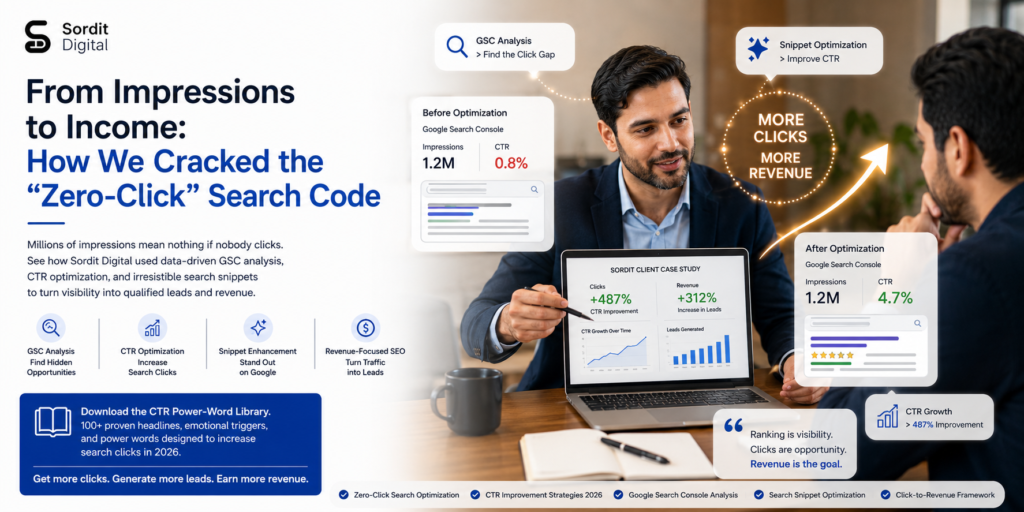
For years, the formula for digital marketing was simple: rank on page one, get the click, and convert the user on your website. However, as we move through 2026, that formula has fundamentally broken. Many B2B and service-based business owners are noticing a terrifying trend: their keyword rankings are as high as ever, yet their organic traffic is plummeting. Welcome to the era of the “Zero-Click” search. With Google’s Search Generative Experience (SGE) and AI-powered engines like Perplexity providing instant, comprehensive answers directly on the results page, users no longer need to click through to your website to get what they need. To survive, your agency needs to pivot. Here is how to master zero-click search optimization to ensure your brand remains the authority that the AI cites. 1. Understanding the Shift to Generative Engine Optimization (GEO) In 2026, traditional SEO has evolved into Generative Engine Optimization (GEO). While SEO focused on keywords and backlinks, GEO focuses on “Source Credibility” and “Information Density.” AI models don’t just look for keywords; they look for the most reliable source to summarize for the user. To win the zero-click battle, your content must be structured in a way that AI agents can easily parse. Be the Direct Answer: Use clear, declarative sentences. Instead of “We offer a variety of SEO services that might help your business,” use “Our SEO services include technical audits, backlink building, and content strategy.” Structured Data is Non-Negotiable: Use advanced Schema markup to tell AI exactly what your data means. Whether it’s pricing, service areas, or FAQs, structured data is the “language” AI speaks. 2. Refining Your B2B SEO Strategy for 2026 A successful B2B SEO strategy 2026 is no longer about chasing high-volume “vanity” keywords. It is about capturing “High-Intent Micro-Moments.” In the B2B sector, the sales cycle is long and involves multiple stakeholders. When a CEO asks an AI, “What is the ROI of a specialized marketing consultant for an interior design firm?” you want the AI to pull that answer from your blog. Focus on High-Value “Niche” Clusters Don’t just target “digital marketing.” Target “digital marketing for luxury interior decor in Kolkata.” By going hyper-niche, you become the definitive source for that specific segment, making it more likely that the AI will pull your data for zero-click answers. 3. Dominating AI Search Engine SEO AI search engine SEO requires a shift from “Writing for Humans” to “Writing for Authority.” When Google or Perplexity generates a summary, they look for citations. Your goal is to be the citation. To increase your citation rate: Original Data & Research: AI loves facts. If Sordit Digital publishes an original study on “Average Lead Cost for Interior Designers in 2026,” every AI engine will cite that study when asked about lead costs. The “E-E-A-T” Factor: Experience, Expertise, Authoritativeness, and Trustworthiness are more important than ever. Ensure every blog post is attributed to a real expert (like MD Anwar) with a verified LinkedIn profile and a history of industry contribution. 4. The Power of “Information Density” In the zero-click world, brevity is a weakness. AI models prefer “dense” content—pages that answer the primary question AND the next three logical questions a user might have. If you are writing about zero-click search optimization, don’t just define it. Explain: Why it’s happening now. How to measure it in Search Console. The specific HTML tags that help AI crawl your site better. How it differs for B2B vs. B2C. This “Information Density” makes your page a “Mega-Source,” which AI engines prioritize when they need to provide a comprehensive summary to a user. 5. Turning “Zero-Clicks” into Brand Authority A zero-click search isn’t a “lost” lead; it’s a “Brand Impression.” If a potential client sees “Sordit Digital” cited as the expert source in a Google AI Overview three times in one week, they won’t need to click a link to know you are the leader in the field. When they are finally ready to hire an agency, they won’t search—they will come directly to your URL or find you on LinkedIn. Optimizing for zero-click means optimizing for trust. Final Checklist for 2026 SEO Success To ensure your content is fully optimized for the current landscape, follow these rules: Primary Keyword Frequency: Ensure your primary keyword, such as zero-click search optimization, appears naturally (around 1% density) throughout the text. Optimize for Snippets: Use bullet points and numbered lists for “How-to” queries. Invest in Video: AI engines are increasingly pulling “Key Moments” from videos to answer search queries. Update Frequently: AI favors fresh data. A blog post from 2024 is considered “dead” to a 2026 AI engine. Conclusion The landscape of search has changed, but the goal remains the same: being the most helpful, most authoritative voice in the room. By embracing zero-click search optimization and refining your AI search engine SEO, Sordit Digital will not just survive the shift—you will lead it.

Medical Digital Marketing agency Sordit Digital is sharing , How to Build a Trustworthy Medical Website for Indian Clinics
Blog

How to Build a Trustworthy Medical Website for Indian Clinics

IntroductionIn today’s digital-first healthcare environment, your clinic’s website serves as your primary point of contact. Patients in India demand a credible, informative, and transparent online presence when choosing their healthcare provider. A trustworthy medical website builds stronger patient relationships, facilitates bookings, and sets your clinic apart—even before a patient walks through your door. ConclusionA trustworthy medical website is built on professionalism, transparency, real patient connections, data privacy, and expert content. For clinics serving the vast and diverse Indian healthcare market, focusing on these best practices means more bookings, lasting relationships, and stronger online reputation.Ready to build a medical website that establishes your clinic as a trusted leader? Contact Sordit Digital for a free audit and powerful healthcare web solutions today.

Effective Content Marketing for Medical Practices by halthcare expert digital marketing Agency Sordit Digital
Blog

Effective Content Marketing for Medical Practices

Introduction Indian patients today are actively researching health information online before making decisions. For medical practices, effective content marketing not only educates but also builds trust, boosts organic rankings, and moves the patient journey from awareness to appointment. Understanding the Indian Healthcare Audience Patients in India value information presented in clear, non-technical language. They seek answers on cost, safety, procedure details, recovery times, and real experiences, often preferring local language and cultural references. Top Content Types for Engagement Content Marketing Best Practices Keyword Research: Base topics on actual patient queries. Use Google Autosuggest, “People also ask,” and health keyword tools to target locally relevant terms. Content Calendar: Plan regular updates—one new blog and one new testimonial per week is a good start. SEO Optimization: Structure content with clear H1/H2s, meta tags, internal links, and keyword integration. Don’t forget image alt text and local focus. Mobile First: Most Indian patients access health info via mobile. Optimize every blog and feature for fast loading and responsive layout. Regional Languages: Consider Hindi, Tamil, Bengali, or other languages depending on your area for select guides or videos—the extra effort sets your practice apart. Internal and External Linking Internal: Guide users from blogs to service descriptions, doctor profiles, appointment forms, and testimonials. Cross-link related articles for increased dwell time. External: Reference trusted Indian health sites, regulatory boards, government standards, and authoritative medical news. Promoting & Sharing Content Use WhatsApp, email newsletters, and social media to share new articles. Partner with local media and community portals for guest articles. Collaborate with medical equipment suppliers or pharma for co-marketing. Tracking Success Monitor patient inquiries, appointment bookings, blog traffic, and social shares using Google Analytics, GMB Insights, and feedback forms. Adjust content topics and frequency based on performance data. Conclusion Content marketing is the tool that connects, educates, and converts Indian healthcare customers. By continuously providing valuable, accessible, and SEO-optimized information, your practice develops authority and organically grows patient trust and bookings. Ready to launch your content marketing strategy? Sordit Digital provides tailored blog plans, video campaigns, and SEO optimization for medical practices—contact us to start building your patient network today.

Leveraging Video Testimonials for the growth of your clinic, by expert healthcare marketing company Sordit Digital.
Blog

Leveraging Video Testimonials to Grow Your Clinic

Introduction In India’s competitive healthcare market, patients are inundated with choices and often skeptical of advertising claims. Authentic video testimonials, where real patients share experiences in their own words, can be the digital key to unlocking trust, boosting organic reach, and inspiring bookings for your clinic. Why Video Testimonials Matter 1. Human Connection: Video captures emotion and detail in ways written reviews simply can’t. When potential patients see others—especially those like themselves—reflecting positively on your clinic, it builds confidence and removes barriers. 2. Social Proof: Nothing validates your expertise like the words of a happy patient. In India, trust is closely tied to community recommendations, making genuine testimonials powerful. 3. SEO & Engagement: Google’s algorithms increasingly prioritize authentic rich media. Video testimonials raise dwell time, signal authority, and improve rankings for clinic websites. How to Source Effective Video Testimonials Recruit Willing Participants: After a successful treatment, ask patients in person or via email to share their experiences on camera. Make the process voluntary and ensure you get written consent. Prepare & Guide: Provide talking points (e.g., their condition, treatment process, how the clinic helped) but keep the delivery unscripted. Ideal Setting:Shoot in a quiet, well-lit area—preferably a consultation room or waiting area that reflects the clinic environment. Ensure high-quality audio and a friendly demeanor. Editing Tips:Keep the video concise (1-2 minutes). Include your clinic’s logo and a simple call to action (“Book an appointment today”), but keep the focus on the patient’s experience. Optimizing Videos for Maximum Impact On Your Website:Display testimonials on your homepage, service pages, and dedicated “Patient Stories” section. On Social Media:Share clips on Instagram, Facebook, and WhatsApp groups. Encourage patients to share with their network for organic reach. On YouTube:Create a “Clinic Reviews” or “Patient Stories” playlist. Use optimized titles (“Diabetes treatment success stories in Delhi”) and description tags for discoverability. Transcripts & Accessibility:Provide text transcripts for each video. This improves SEO with keyword integration and caters to patients with hearing impairments. Building a Testimonial Strategy for Indian Clinics Local Focus: Encourage patients from different regions, age groups, and backgrounds to participate—this shows inclusivity and expands geographic trust. Periodic Updates: Regularly add new testimonials reflecting seasonal campaigns, new treatments, or facility upgrades. Incentive Programs: Offer discounts or loyalty points for patients who volunteer for video feedback (always ensure transparency and compliance with medical advertising laws). Internal and External Linking Internal:Link each testimonial to related service pages (e.g., a diabetes testimonial links to your diabetes care page), doctor profiles, and informative blog posts. External:Reference accreditation boards (NABH, IMA), government health portals, or medical publications reviewed in the video. Addressing Privacy & Ethics Indian clinics must respect patient privacy. Do not solicit testimonials for sensitive treatments without explicit consent. Have patients sign a release form indicating their understanding and willingness to be featured publicly. Conclusion Video testimonials are more than marketing—they are your clinic’s digital “word of mouth.” By investing in ethical, high-quality, regularly updated patient stories, you foster authentic relationships and accelerate organic growth. Are you ready to capture your patients’ real-life success stories on video? Sordit Digital specializes in video testimonial strategy and implementation for clinics across India. Contact us for a free consultation and transform your website into a hub of trust.

Sordit Digital, Digital Marketing agency for healthcare sector & doctors share a Step by step guide for local SEO for doctors & small clinic setups
Blog

Local SEO for Doctors: Step-By-Step Guide

Local SEO for Doctors: Step-By-Step Guide Introduction “Doctor near me” and “clinic in [area]” are some of the most powerful search terms in India’s healthcare space. Winning local SEO means your practice can be discovered precisely when patients need your expertise. This guide covers how to build a robust local SEO strategy for Indian doctors in 2025. Step 1: Claim and Optimize Google My Business Begin by claiming your Google My Business profile. Fill in complete information—accurate address, phone, business hours, website, services, and appointment link. Consistently upload authentic photos of your clinic, staff, and logo. Use the Posts feature to share updates, health tips, announcements, and offers. Step 2: Research Location-Based Keywords Think like your target patient. Use Google Keyword Planner, SEMrush, or Ubersuggest to discover queries like “cardiologist in Vashi Navi Mumbai” or “orthopedic near me.” Place these naturally within page titles, meta descriptions, headers, and throughout your website content. Step 3: Gather Genuine Reviews Patient reviews build online reputation and aid local SEO. Encourage satisfied patients through friendly reminders, email follow-ups, or signage at your clinic to post reviews on Google, Practo, and Facebook. Respond to every review—positive feedback fosters trust, while addressing complaints reflects professionalism. Step 4: Build and Maintain Local Listings Ensure your clinic is listed identically on all platforms—Justdial, Sulekha, IndiaMart, and medical directories. Consistent NAP (Name, Address, Phone) information strengthens Google’s confidence in your location. Step 5: Create Location-Specific Content Publish blogs on local health trends, area-specific issues (e.g., “monsoon allergies in Pune”), and community outreach events. Announce upcoming health camps and collaborations with local organizations. Step 6: Partner for Local Backlinks Collaborate with allied health providers, local businesses, or area news websites for mutual articles and event coverage. Each mention and link boosts your local authority. Step 7: Optimize for Mobile Most local searches are performed on smartphones. Ensure your site is fast, responsive, and includes quick-call and WhatsApp booking buttons for instant communication. Step 8: Monitor Results and Adjust Use Google Analytics and GMB Insights to track impressions, clicks, and bookings from local searches. Adjust your content and keyword strategy regularly, prioritizing top-performing terms. Internal Linking Connect your local content, doctor profiles, health blogs, and testimonials for easier site navigation and better SEO crawlability. External Linking Regularly include references to local medical institutions, national health portals, and trusted local directories. Conclusion Local SEO is essential for Indian doctors seeking growth and visibility among nearby patients. By following this stepwise approach—complete profiles, relevant keywords, reviews, local content, and links—your practice can dominate local searches and convert online interest into appointments. Want a custom Local SEO plan for your clinic? Reach out to Sordit Digital for hands-on optimization and fast results.

Top 10 Medical SEO Strategies for 2025 by Sordit Digital, best Digital Marketing for Medical industry in India and Dubai
Blog

Top 10 Medical SEO Strategies for 2025

Top 10 Medical SEO Strategies for 2025 Introduction SEO for medical clinics has rapidly transformed in India. With millions relying on search engines for choosing clinics and services, your online visibility is key to organic patient acquisition. In 2025, mastering both technical and patient-focused SEO tactics makes your clinic discoverable, authoritative, and trusted. 1. Optimize Google My Business (GMB) A complete, regularly updated GMB profile can be a game changer in local search. Set precise location, clinic hours, detailed descriptions, service categories, photos of your premises, and compelling CTAs. Encourage patients to leave reviews on GMB—they signal authority and trust to Google and prospective patients. 2. Mobile and Voice Search Optimization With over 70% of Indian searches happening on mobile and a surge in voice queries (“skin specialist near me”), your site must be mobile-friendly and use conversational keywords and answers. Implement AMP and keep load times under 2 seconds. 3. Structured Data & Rich Snippets Use medical schema markup (JSON-LD) for doctors, clinics, reviews, FAQs, and contact information. This allows Google to feature your clinic in rich snippets, maps, ratings, and “people also ask.” 4. Authority-Building Content Regularly publish long-form, expert answers on trending health topics, procedures, and patient education—answer questions that real patients are searching for in India. Content depth and update frequency signal expertise. 5. Localized Keywords & Landing Pages Work local keywords throughout page titles, meta descriptions, headings, and image alt text: “Best dental clinic in Bandra Mumbai,” “Pediatrician in Chennai.” Create dedicated landing pages for major nearby areas. 6. High-Quality Backlink Building Create guest articles for reputable health blogs, medical journals, and local news portals. Participate in panel discussions, podcasts, and events—with every mention linking back to your website. 7. Video Content and Multimedia Integration Publish procedural videos, doctor introductions, and patient testimonials. Transcribe videos for extra keyword content. Host on YouTube and embed on site. Google prefers sites with rich media. 8. Review and Reputation Management Monitor review platforms (Practo, Google, Facebook), respond professionally, and feature positive feedback on-site. Integrate reputation management tools for streamlined monitoring. 9. Robust Technical SEO Invest in reliable, secure hosting. Ensure SSL encryption (HTTPS), repair broken links, compress images, and keep plugins updated. Test with Google Search Console and resolve any crawl errors. 10. Social Media Integration Share expertise via Facebook, Instagram, WhatsApp, and Twitter. Promote new blog posts, service updates, and interact with patients on social channels. Internal and External Linking Internal: Reference doctor profiles, related blogs, service pages, FAQs and review sections within all content. External: Link to NABH, IMA, Ministry of Health, and top health portals for credibility—and use backlinks to drive SEO value. Conclusion Mastering these 10 SEO strategies will transform your clinic’s digital presence, driving more patient inquiries and positioning you ahead of competitors. SEO for healthcare is a marathon, not a sprint. Commit to optimization, education, and transparency—Google and your patients will reward you. Ready for an expert medical SEO audit? Contact Sordit Digital for data-driven, ethical healthcare marketing today.

Digital Marketing

Instagram Indexed by Google: A Strategic Guide for Long-Term SEO Success

I. CONTEXT The Rise of Social-Search Integration The digital landscape is undergoing structural change. Once treated as distinct pillars, search and social media are now converging into a single ecosystem of brand discovery. In June 2025, Google began indexing public Instagram content—profiles, captions, and selected Reels—allowing this content to appear in Google search results. This development mirrors the broader trend seen in consumer journeys, where users toggle between platforms before making decisions. As Think with Google reports, 81% of consumers consult both search engines and social platforms before purchasing, regardless of their point of entry. This evolution makes Instagram not just a social app, but an active contributor to organic search visibility. II. THE ISSUE Traditional SEO Strategies Are No Longer Sufficient Most SEO strategies are still optimized for: Website pages   Blogs and landing pages   YouTube or Google Business Profiles   Yet, consumer engagement has shifted significantly to: Instagram   TikTok   Short-form UGC (user-generated content)   When Instagram content remains unoptimized for indexing, brands miss the opportunity to: Show up in long-tail keyword searches   Support E-E-A-T (Experience, Expertise, Authoritativeness, Trustworthiness)   Reinforce branding across organic touchpoints   In a landscape where trust and discoverability are core to conversion, siloed content strategies will no longer scale. III. STRATEGIC APPROACH Redefining SEO to Include Social Surfaces To thrive in the post-2025 digital ecosystem, brands must adopt an integrated content model that connects: Surface Role Website Core product/brand hub Google SERPs Primary discovery path Instagram Real-time storytelling, proof of credibility Blog Depth and long-form support GMB (Maps) Local trust and convenience By treating Instagram as a content node, brands increase their indexable surface area and reduce friction in search journeys. This framework leads to what we call the Visibility Triangle™: Search + Social + Signals = Scalable Organic Visibility IV. IMPLEMENTATION Action Plan to Align Instagram with Search Best Practices . Content Optimization Write Search-Friendly Captions Use natural language that mirrors what people actually search for. Example: Instead of “Mood 🌴”, write: “Bali beachfront villas with private plunge pools – sunset view” Use Alt Text on Every Image Instagram allows alt-text customization. Describe the image clearly with product, location, or service context. Best practice: Keep under 125 characters. Avoid keyword stuffing. Optimize Your Bio Like a Homepage Include: Primary service or product Location (if local relevance matters) Branded CTA or website link Tag Locations Strategically Location data supports local search visibility when matched with user intent (e.g. “best cafes in Jumeirah Dubai”). B. Technical Integration Embed Instagram Posts on Website This allows search engines to associate Instagram content with your domain. Link from Google Business Profile (GMB) Add Instagram as a “social link” under your Google Business Profile to connect entity signals. Cross-Reference with Structured Content Mention Instagram posts within your blogs or case studies. Use descriptive anchor text and ensure consistent metadata. C. Monitoring & Performance Tracking Metric Tool Use Indexed Instagram URLs Google Search Console Confirm crawl and visibility Instagram → Website Clicks GA4 Attribution insights Image Impressions GSC Image Search Content performance Caption Keyword Ranking Semrush/Ahrefs Track long-tail visibility shifts V. FUTURE OUTLOOK Where Social + Search Is Headed As Google’s Helpful Content System evolves, emphasis will continue shifting toward: First-hand experiences Cross-platform consistency User engagement signals (especially from social) We anticipate the following changes over the next 12–18 months: Deeper integration of Reels and short-form video into SERPs Better support for social alt-text in Google Lens and Image Search More entity-level indexing of profiles across platforms In short, Instagram is becoming part of the semantic web. Brands that treat it accordingly will not just survive algorithm updates—they’ll thrive because of them. FAQs Q1. Does Google index all Instagram content? No. Only public posts, profiles, and select Reels are indexable. Stories and private profiles are not. Q2. How do I check if my Instagram content is indexed? Use Google Search Console and inspect the URL of your profile or post. Q3. Will this help with local SEO? Yes. Posts tagged with a location and optimized with relevant captions can support local pack visibility. Q4. Should I use Instagram captions like blog content? Use them like micro-meta descriptions—natural, useful, and aligned with user intent. Avoid keyword stuffing. Conclusion The indexing of Instagram by Google is not a trend—it’s a signal. A signal that the future of SEO is multi-surface, people-first, and platform-fluid. To rank well over time: Align your Instagram with SEO fundamentals Embed it in your broader content and brand strategy Track your performance as search visibility evolves Ready to Build a Future-Proof SEO Framework? At Sordit Digital, we specialize in integrated SEO strategies that include social indexing, structured content systems, and brand-first optimization. 📩 Start with a free SEO + Instagram audit: hello@sorditdigital.com 🌐 www.sorditdigital.com