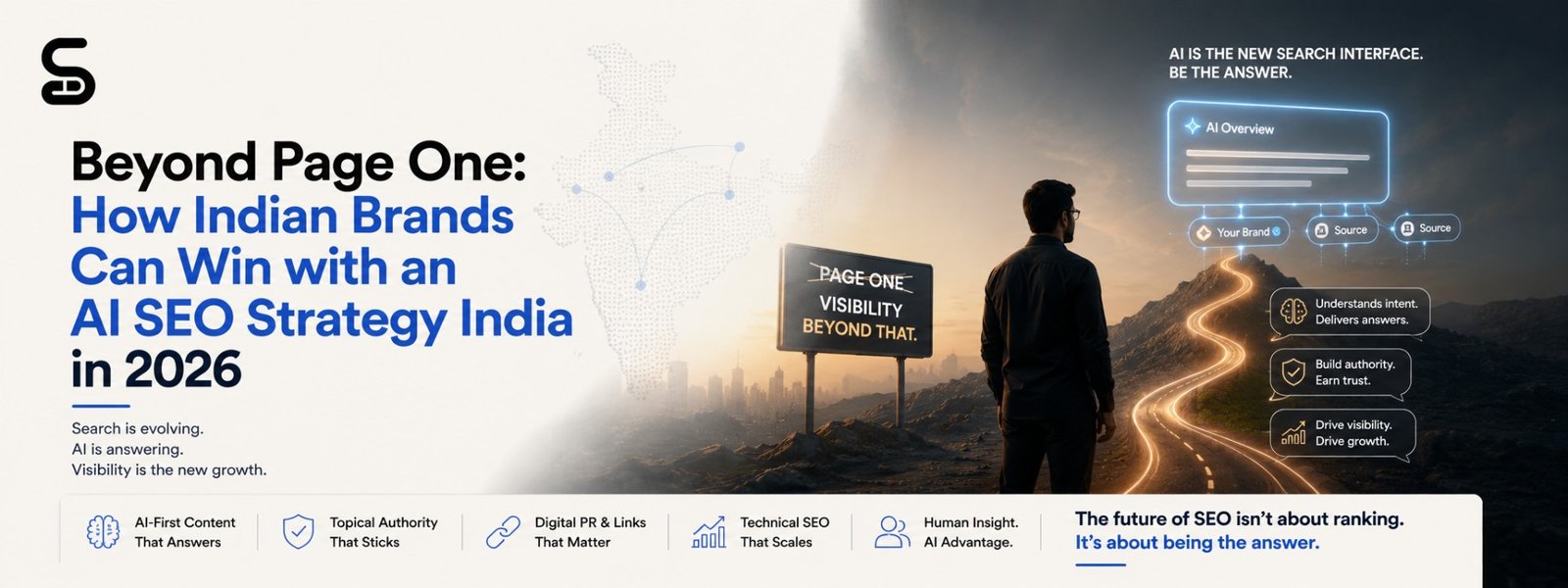

If you are still obsessing over whether your keyword appears in the first 100 words of your blog, you are playing a game from 2023. In April 2026, the rules of visibility have shifted. With Google’s AI Overviews (SGE) now appearing in nearly 50% of all search queries, the goal is no longer just to rank—it is to be cited.
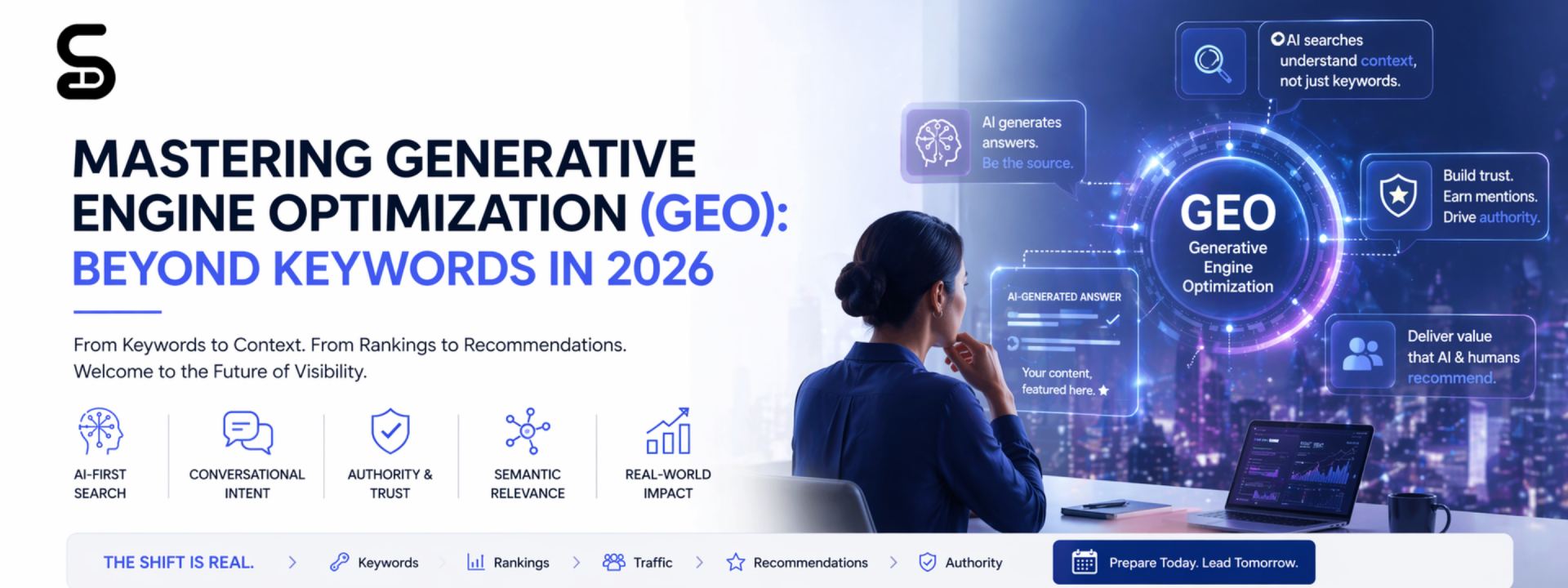
Welcome to the era of Generative Engine Optimization (GEO). At Sordit Digital, we’ve seen that traditional SEO is now just the foundation. To dominate the modern search landscape, you must optimize your content so that LLMs (Large Language Models) like Gemini, ChatGPT, and Perplexity don’t just “read” your site, but treat it as their primary source of truth.
1. GEO vs. SEO 2026: What’s the Real Difference?
Traditional SEO was built on “Pull Marketing”—optimizing for a user to click a blue link. Generative Engine Optimization (GEO) and Answer Engine Optimization (AEO) are about “Synthesis Marketing.”
The fundamental difference in AEO vs SEO 2026 lies in the delivery:
- Traditional SEO: Aims for a #1 position in a list of links. Success is measured by Click-Through Rate (CTR).
- GEO: Aims to be the “Cited Source” inside an AI-generated answer. Success is measured by “Share of Model” and citation frequency.
If your content is synthesized into an AI answer but not cited, you provide value to the user but gain zero brand equity. GEO ensures your brand name and link are attached to the information provided.
2. The AI Overview Citation Strategy
To be cited in an AI Overview, your content must be “Atomic.” This means it needs to be broken down into self-contained, fact-dense passages that an AI can easily extract.
The “Direct-Answer” Framework
AI models prioritize content that does the work for them. To implement a winning AI Overview citation strategy, follow this structure for every H2:
- Direct Statement: Answer the question in the first sentence.
- Supporting Data: Provide a statistic or a hard fact.
- Entity Context: Link the fact to a recognized authority or primary source.
Example: Instead of saying “We have helped many doctors with SEO,” say “Sordit Digital’s healthcare SEO strategy has increased patient bookings by an average of 34% for clinics in Kolkata as of Q1 2026.”
3. The Power of Information Density in Content
In 2026, “Fluff” is the enemy of rankings. AI engines use a metric called Information Density in content. This isn’t about word count; it’s about the ratio of “unique facts” to “filler words.”
High information density makes your content “sticky” for AI. When a model like Claude or GPT-5 scans your page, it looks for:
- Unique Data Points: Original research or proprietary case studies.
- Technical Specifications: Exact numbers, prices, and dimensions.
- Semantic Clarity: Using precise terminology (e.g., “Generative Engine Optimization”) instead of vague phrases (e.g., “New search stuff”).
4. Building "Entity Authority" Over "Link Juice"
In the GEO world, who you are matters more than how many links you have. Google now uses “Entity Resolution” to verify if a source is trustworthy.
- Verified Authorship: Every piece of content on Sordit Digital is linked to a verified professional profile.
- Unlinked Brand Mentions: AI models track how often your brand is mentioned across Reddit, Quora, and industry news—even without a backlink. These mentions build your “Entity” strength in the eyes of the AI.
5. Transitioning from "Search" to "Answer"
As you optimize your pages, ask yourself: “If a user never clicks through to my site, did they still learn that Sordit Digital is the expert?” By mastering Generative Engine Optimization (GEO), you aren’t just fighting for traffic; you are fighting for the “Brainspace” of the AI models your customers use every day.
FAQs: Mastering GEO in 2026
Q: Is SEO dead?
A: No. SEO is the prerequisite for GEO. An AI cannot cite a page it cannot crawl or trust. You need a strong Technical SEO foundation before you can win at GEO.
Q: How do I track GEO success?
A: Look for “Synthesis Impressions” in your 2026 Search Console and monitor your “Share of Model” using AI tracking tools to see how often your brand is cited compared to competitors.
Q: Does content length matter for GEO?
A: Structure matters more than length. A 500-word post with high information density in content will often out-cite a 3,000-word “fluff” article.
Does your current website provide enough “Information Density” to be cited by AI? Explore Sordit Digital to see how we can re-architect your content for the Generative Era.